


How to Recover from Google Algorithm Updates in 2026
Traffic drops feel sudden. Rankings disappear without warning. Teams often react by changing everything at once.
That approach makes recovery harder.
In 2026, Google updates are less about penalties and more about re-evaluation. Your site is not “punished.” It is re-scored based on how well it fits search intent, structure, and trust signals.
Recovery is not about quick fixes. It is about rebuilding alignment.
Quick Answer:
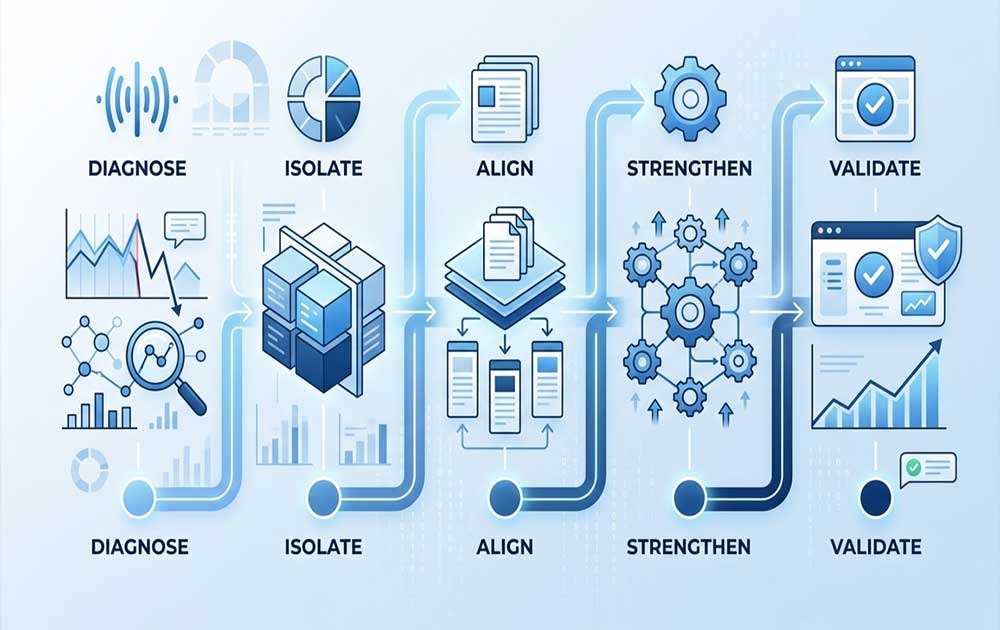
At ZeroOne, we approach recovery as a structured process. You identify what changed, isolate affected areas, realign content with current intent, strengthen topical authority, and rebuild trust signals. Sites that recover successfully do not rely on random adjustments. They fix the system behind the content, not just the content itself.
Recovery Overview Table
What Changed in 2026 Algorithm Updates
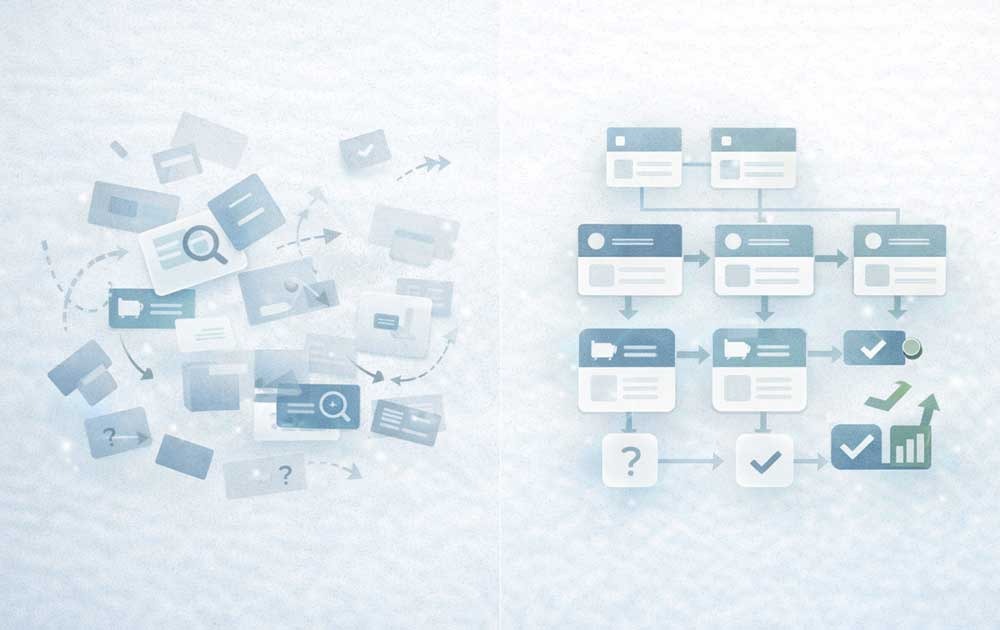
The nature of Google updates in 2026 is fundamentally different from previous years. The shift is not toward stricter penalties, but toward deeper evaluation models. Instead of asking whether a page is optimized, Google now evaluates whether it belongs.
This distinction matters. A page might still be well-written, technically sound, and even keyword-aligned, yet lose rankings because it no longer fits the evolving intent behind a query. In many cases, what changed was not your content, but the expectation of the search result itself.
Google now interprets queries in context. It looks at user behavior, decision pathways, and the type of outcomes users expect after clicking a result. As a result, pages that once performed well can quickly lose relevance if they do not support the full journey from question to decision.
This is why recovery in 2026 starts with understanding positioning rather than editing content.
Why Most Recovery Attempts Fail
Most teams approach recovery as a content problem. They rewrite sections, adjust headings, or expand word count, assuming that more information will restore rankings. In reality, these actions often miss the core issue.
The problem is rarely depth alone. It is a misalignment.
If your page answers a different version of the query than what Google currently prioritizes, no amount of rewriting will fix it. The structure, angle, and purpose of the page must shift to match the new intent.
Another common mistake is overreaction. When traffic drops, teams often apply changes across the entire site. This removes existing signals that were still working and introduces new inconsistencies. Instead of stabilizing rankings, it increases volatility.
Effective recovery requires precision. You need to understand exactly what changed and respond at the right level, not across the entire system.
Rebuilding Search Intent Alignment
Search intent in 2026 is more dynamic than before. It is no longer limited to simple categories such as informational or transactional. Instead, it reflects where the user is in a decision process.
For example, a query that previously returned basic guides may now prioritize comparison frameworks or decision-driven content. This shift indicates that users are no longer looking to learn, but to choose.
To recover, you need to map your content to the current stage of intent. This means analyzing the top-ranking pages and identifying patterns in how they guide users forward. The goal is not to copy competitors, but to understand what kind of outcome your page is expected to deliver.
Once this is clear, restructuring becomes straightforward. Sections should lead users from understanding to evaluation and finally toward decision-making. Pages that follow this progression tend to regain visibility because they align with how Google now interprets usefulness.
Content Structure as a Ranking Signal
Structure has become one of the most underestimated factors in recovery. In 2026, Google evaluates how information is organized, not just what is written.
A well-structured page communicates clarity. It shows a logical flow, where each section builds on the previous one and contributes to a coherent outcome. Poor structure, on the other hand, creates friction. Even if the information is accurate, it feels fragmented.
Strong pages typically begin with a direct answer, then expand into deeper layers. They introduce context, provide frameworks, and support decision-making without overwhelming the reader. This balance is critical.
Improving structure does not require rewriting everything. In many cases, reorganizing existing content, refining headings, and introducing clearer transitions is enough to restore performance. The goal is to make the page easier to interpret for both users and search engines.
The Role of Topical Authority in Recovery
One of the defining characteristics of 2026 updates is the emphasis on topical authority. Google no longer evaluates a page in isolation. It evaluates how well your entire site supports a subject.
This means that even strong pages can lose rankings if they are not supported by a broader content system. A single article about SEO recovery, for instance, carries less weight if it is not connected to related topics such as technical SEO, content strategy, and algorithm analysis.
Topical authority is built through coverage and connection. You need to demonstrate that your site consistently addresses different aspects of a topic, and that these pages are linked in a meaningful way.
Recovery often accelerates when you expand strategically rather than reactively. Instead of adding random content, focus on filling gaps within your existing topics. This creates a more complete system, which Google recognizes as a stronger signal of authority.
Internal Linking as a Structural Layer
Internal linking has evolved into a core component of SEO architecture. It is no longer just a navigation tool. It defines how authority flows across your site and how topics are connected.
After an algorithm update, weak internal linking often becomes more visible. Pages that were previously ranking may lose support if they are not properly integrated into the site structure.
Effective internal linking creates pathways. It connects related content in a way that reinforces relevance and guides users deeper into the topic. This also helps search engines understand the hierarchy of your content.
Improving this layer requires intention. Links should reflect real relationships between topics, not arbitrary connections. When done correctly, internal linking strengthens both visibility and stability.
Managing the Recovery Timeline

One of the most misunderstood aspects of recovery is timing. Changes do not produce immediate results because Google’s evaluation process operates in cycles.
After implementing updates, your pages need to be re-crawled, re-indexed, and re-evaluated within the context of the broader search landscape. During this period, rankings may fluctuate. This is part of the process, not a sign of failure.
The key is consistency. Once you have aligned your content and structure, avoid making frequent changes. Stability allows Google to properly assess your improvements.
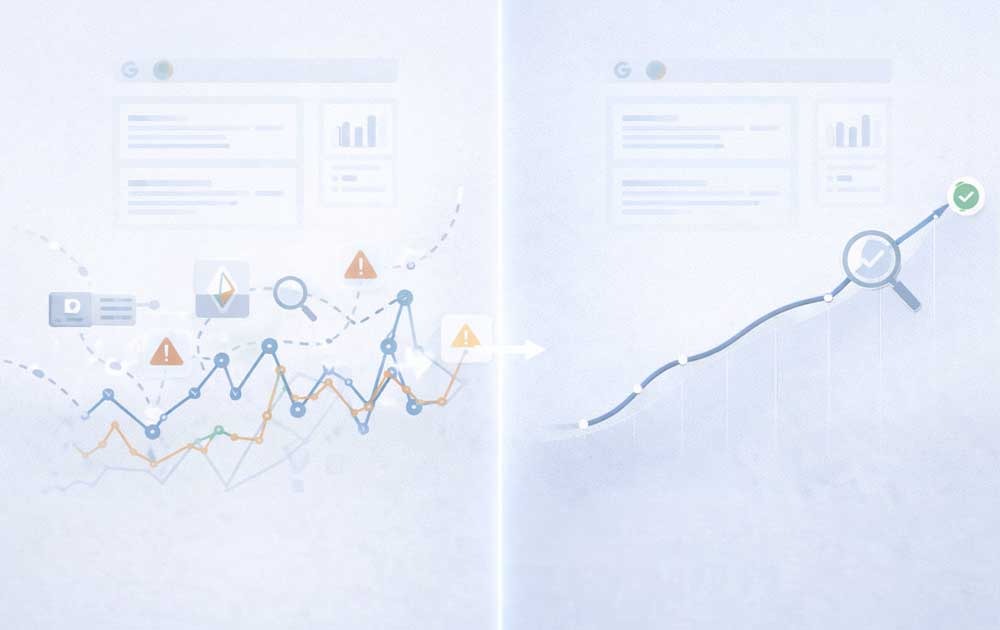
Sites that achieve recovery typically show gradual improvement rather than sudden jumps. Over time, as signals strengthen, rankings stabilize and begin to grow.
Building a Recovery System
The most important takeaway from 2026 updates is that recovery should not be treated as a one-time effort. It should become part of how your SEO operates.
This means developing a system that continuously monitors performance, identifies shifts in intent, and updates content proactively. Instead of reacting to drops, you anticipate changes and adjust before they impact rankings.
A strong system includes clear content standards, regular audits, and a structured approach to expansion. Each new page is created with a defined role, connected to existing content, and aligned with user intent from the start.
This approach reduces risk and creates long-term resilience.
Final Insight
Google algorithm updates in 2026 are not disruptions. They are recalibrations.
They expose gaps in structure, clarity, and authority. Sites that rely on isolated optimizations struggle to adapt, while those built as systems become more stable over time.
Recovery, therefore, is not about fixing what broke. It is about aligning your site with how search now works.
At ZeroOne, this is where we focus our efforts. Not on isolated adjustments, but on building structured content systems that remain consistent under changing conditions. Because in most cases, rankings do not drop due to a single issue. They drop because the underlying system is not strong enough to sustain them.
FAQ
How long does it take to recover from a Google update in 2026?
Recovery depends on the depth of the issue, not just the changes you apply. If the problem is limited to intent mismatch on a few pages, improvements may start within a few weeks after re-crawling. When the issue is structural, involving weak topical coverage or poor internal linking, recovery usually takes longer because Google needs to re-evaluate the entire system. The key signal is not speed, but stability. Gradual, consistent improvement is a stronger indicator than short-term ranking spikes.
Should I rewrite all my content after an update?
Rewriting everything is rarely the right move. Broad changes often remove signals that are still working and create new inconsistencies across the site. A more effective approach is to isolate underperforming pages, understand why they dropped, and apply targeted fixes. In many cases, restructuring or repositioning content delivers better results than full rewrites.
Is content length important for recovery?
Content length on its own has little impact. What matters is whether the page fully supports the user’s intent. In 2026, Google evaluates how well a page helps users move forward, not how long it is. Some queries require depth and layered explanation, while others favor concise, decision-focused content. The goal is to match the expected outcome of the query, not to increase word count.
Do backlinks still influence recovery?
Backlinks remain relevant, but their role has shifted. They now function more as validation signals rather than direct ranking drivers. A site with strong structure and clear topical authority benefits more from backlinks than a fragmented site with the same link profile. In recovery scenarios, backlinks support trust and reinforce positioning, but they cannot compensate for weak alignment or poor structure.
Can rankings fully return after a major drop?
Full recovery is possible, but it often requires more than fixing individual pages. In many cases, rankings drop because the overall content system no longer aligns with how Google evaluates topics. Restoring performance may involve redefining content roles, expanding coverage, and strengthening internal connections. Sites that treat recovery as a structural adjustment rather than a quick fix are more likely to regain and sustain their rankings.


