


The Ultimate Guide: Using CRM to Build Long-Term Customer Loyalty Programs
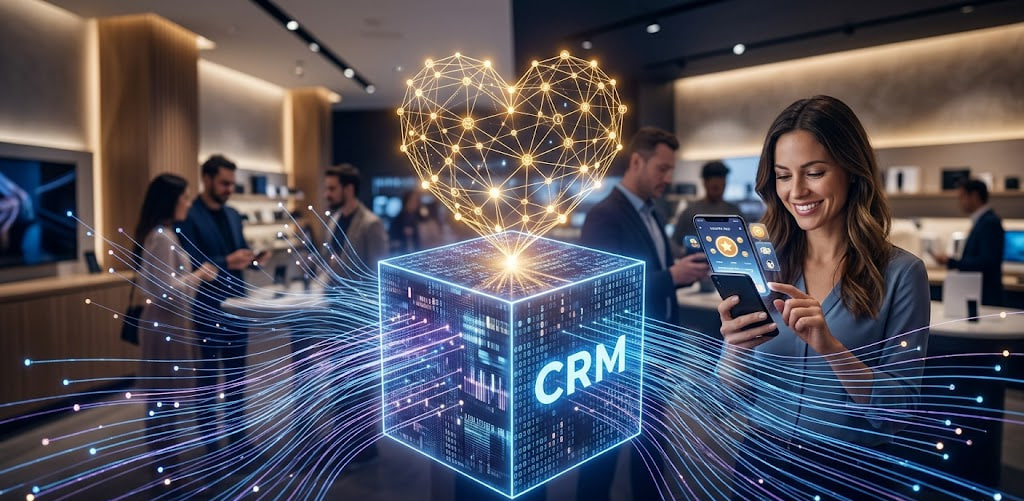
When using CRM to build long-term customer loyalty programs, you transform standard one-time buyers into dedicated brand advocates by leveraging centralized data to deliver highly personalized, timely rewards. A Customer Relationship Management (CRM) system acts as the core engine for your retention strategy, automatically tracking user behavior, purchase history, and engagement metrics. By segmenting your audience and triggering automated communications—such as VIP discounts or milestone emails—a CRM ensures every customer feels uniquely valued. This targeted approach eliminates the guesswork from customer retention, directly increasing Customer Lifetime Value (CLV), drastically reducing churn rates, and providing a scalable foundation for sustainable business growth.
How to Implement Using CRM to Build Long-Term Customer Loyalty Programs
Building a successful retention program requires a structured, data-first approach. You cannot simply install software and expect instant loyalty; you need a strategic rollout plan that aligns with your user journey.
Follow these proven steps to effectively integrate your retention strategy with your business technology.
Step 1: Segment Your Audience Effectively
Treating all customers exactly the same is a massive mistake. Use your CRM to segment your audience into distinct categories based on their historical value and behavior.
Common segmentation strategies include:
- High-Value Customers (VIPs): Those who purchase frequently and have a high average order value.
- At-Risk Customers: Buyers who haven't made a purchase in the last 90 days.
- Brand Advocates: Customers who frequently refer others or leave positive reviews.
Step 2: Personalize the Customer Journey
Once your audience is segmented, create tailored communication paths for each group. Personalization goes far beyond simply using a customer's first name in an automated email.
Send targeted content based on their previous purchases. If a client bought a specific software tool, send them advanced tutorials or offer a complementary add-on product that enhances their experience.
Step 3: Set Up Automated Reward Triggers
Your CRM should do the heavy lifting when it comes to distributing rewards. Map out the exact actions you want to encourage, and set up automated workflows to recognize them instantly.
Examples of automated triggers:
- Birthday Rewards: Automatically send a personalized offer on the customer's birthday.
- Anniversary Milestones: Celebrate the anniversary of their first purchase with your brand.
- Points Accumulation: Instantly notify users when they have enough points to redeem a reward.
The Connection Between CRM and Customer Retention
To fully grasp how technology drives retention, we first need to look at the mechanics of modern customer relationships. Today's consumers expect brands to anticipate their needs before they even voice them.
If your business relies on disconnected spreadsheets or outdated tools, delivering that personalized experience becomes impossible. A CRM bridges this gap by acting as a single, reliable source of truth.
What is a CRM Loyalty Program?
A CRM loyalty program is a structured retention strategy powered by robust software. Instead of relying on generic punch cards or basic point systems, it uses deep data analytics to reward customers meaningfully.
Key characteristics include:
- Behavioral Tracking: Rewarding users for engagement, not just transactions.
- Tiered Rewards: Moving customers into exclusive VIP tiers based on their spend history.
- Omnichannel Integration: Ensuring a seamless experience across email, website, and support interactions.
Why Customer Retention Matters More Than Acquisition
Many businesses obsess over acquiring new leads, but the real profit lies in keeping existing ones. According to studies by authoritative sources like Forbes, increasing customer retention rates by just a small margin can multiply profits exponentially.
Acquisition costs are constantly rising due to competitive ad spaces. By focusing on loyalty, you maximize the return on your initial marketing investment and create a highly predictable revenue stream.
Ready to turn one-time buyers into lifelong brand advocates? Whether you need a tailored CRM or a fully integrated ERP ecosystem, our experts are here to help. Contact Zero One Tech today to build a retention engine that scales your revenue seamlessly.
Key Features of a CRM for Customer Loyalty
Not all business software is created equal. To successfully launch and manage a loyalty initiative, your platform needs specific capabilities that go well beyond basic contact storage.
Here are the essential features your system must possess to drive long-term engagement.
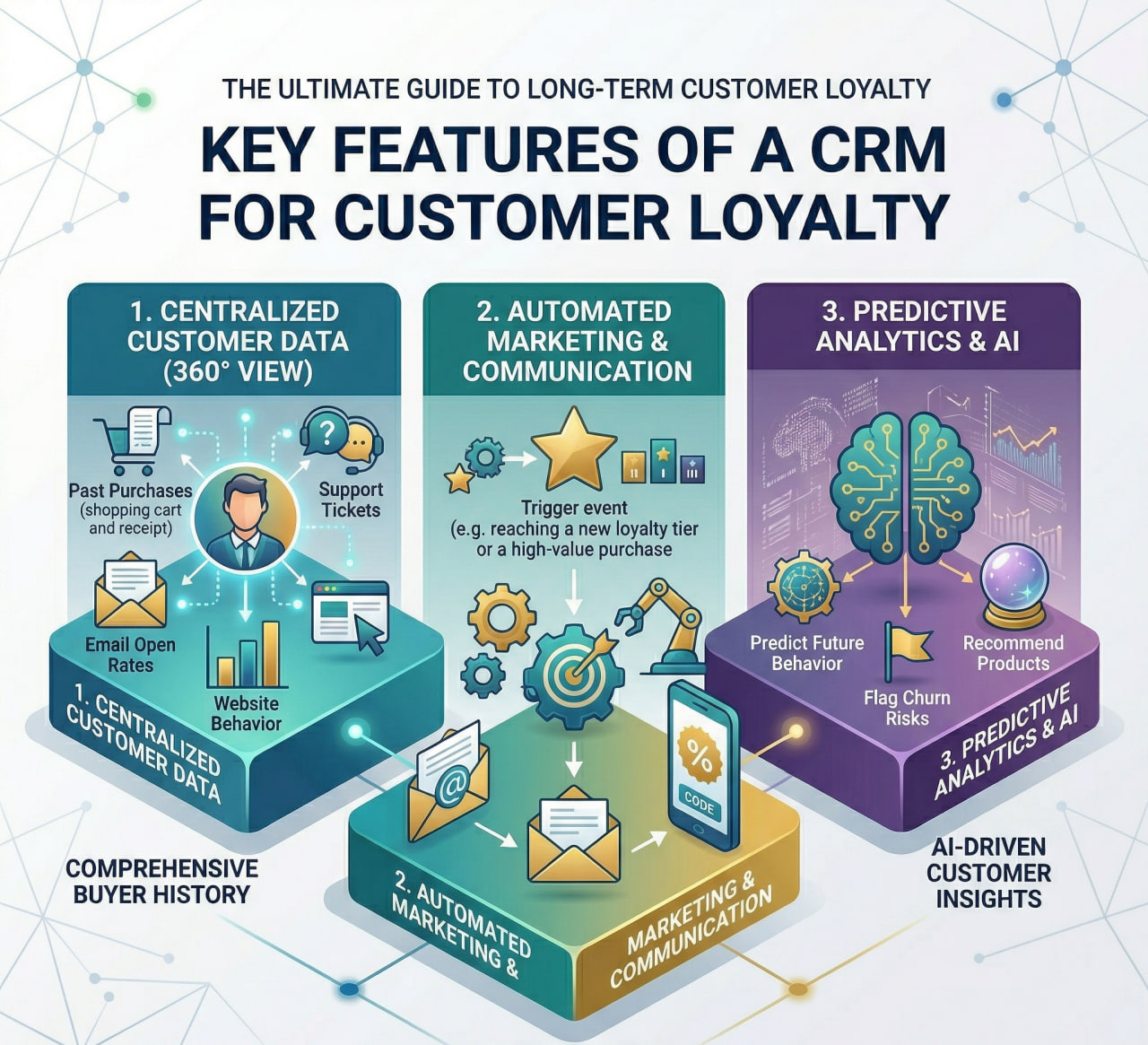
Centralized Customer Data (360-Degree View)
You cannot reward a customer if you don't know their history. A powerful CRM provides a comprehensive, 360-degree view of the buyer.
This includes past purchases, support tickets, email open rates, and website browsing behavior. When your teams have access to this unified dashboard, they can provide hyper-personalized service.
Automated Marketing and Communication
Manual follow-ups are inefficient and highly prone to human error. Automation allows you to set up triggers based on specific, high-value customer actions.
For example, when a customer reaches a new loyalty tier, the system automatically sends a personalized congratulatory email with a special discount code.
Predictive Analytics and AI
Modern systems use Artificial Intelligence to predict future customer behavior. By analyzing historical data, the CRM can flag accounts that are at risk of churning.
It can also suggest the best times to send re-engagement emails or recommend products that a specific customer segment is highly likely to purchase next.
Best Platforms for Building Customer Loyalty
Choosing the right technology stack is crucial for your retention strategy. Off-the-shelf tools might work for small startups, but growing businesses require robust, customized, and integrated solutions.
1. Zero One Tech Custom CRM
When out-of-the-box tools don't quite fit your operational needs, bespoke development is the ultimate solution. As a leader in business automation, Zero One Tech builds highly customized software solutions tailored to your exact loyalty program requirements.
Instead of forcing your business to adapt to a rigid software, we design a CRM that perfectly fits your workflow. From lightweight automations to full-scale enterprise applications, our custom platforms integrate seamlessly with your existing operations, establishing a secure, scalable foundation that drives measurable efficiency and deep customer loyalty.
2. Odoo ERP
Odoo is a powerful, open-source system that unifies your entire business ecosystem. Its seamlessly integrated apps mean your CRM communicates flawlessly with your eCommerce, inventory, and accounting modules.
By utilizing a professional Odoo implementation, businesses can effortlessly track loyalty points from website purchases and automatically apply those specific discounts to future invoices, creating a frictionless user experience.
3. Zoho One
Zoho One provides a comprehensive suite of over 45 integrated applications. Its CRM module is incredibly powerful for tracking customer interactions, managing sales pipelines, and executing data-driven marketing.
With an expert Zoho implementation, you can easily manage leads, track support interactions, and deploy targeted email campaigns that keep your loyalty program members highly engaged and continuously active.
Measuring the Success of Your CRM Loyalty Strategy
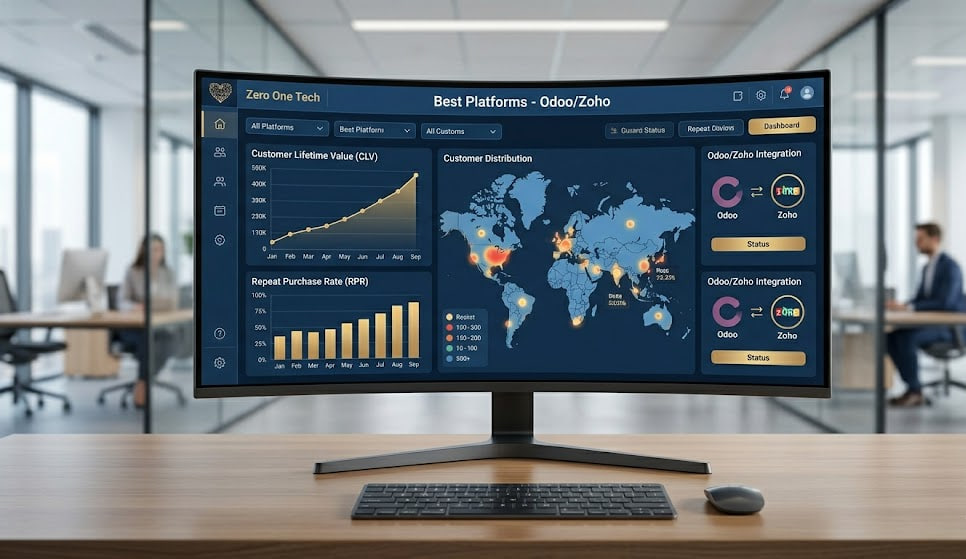
A loyalty program is only successful if it drives a measurable Return on Investment (ROI). You must track specific Key Performance Indicators (KPIs) to ensure your strategy is working.
Utilizing integrated BI dashboards can help you visualize this complex data in real-time.
Real-World Value of CRM-Driven Loyalty
Leading global brands have conclusively proven that data-driven loyalty programs outcompete traditional, scattergun marketing. By utilizing smart technology, they offer hyper-relevant perks that modern consumers actually care about.
For instance, companies that utilize advanced CRM data analytics report significantly higher user engagement. As highlighted by business authorities like Harvard Business Review, understanding customer profitability and retaining the right buyers is the ultimate key to sustainable, long-term growth.
When a customer feels recognized and rewarded by your automated systems, price becomes much less of a deciding factor. They choose your brand repeatedly because of the seamless, personalized experience your technology provides.
Stop losing valuable customers to your competitors. At Zero One Tech, we specialize in helping growing businesses streamline operations with custom ERP, CRM, and AI-powered automation.
Contact us today to book your consultation and take your business to the next level.
Frequently Asked Questions (FAQ)
1. How long does it take to see results from a CRM loyalty program?
While you may see a slight increase in engagement within the first 30 days due to automated communications, meaningful ROI and positive shifts in Customer Lifetime Value (CLV) typically take 3 to 6 months to materialize as data accumulates.
2. Can small businesses benefit from using CRM to build long-term customer loyalty programs?
Absolutely. Small businesses often have a distinct advantage in building personal relationships. A custom CRM simply scales that personalized touch, allowing small teams to automate follow-ups and compete with larger corporations.
3. What is the difference between a standalone loyalty app and a CRM-integrated program?
A standalone app creates a disconnected data silo. A CRM-integrated program links loyalty data directly to your sales, support tickets, and marketing history, giving you a complete, unified view of the buyer's journey.
4. Is it difficult to migrate my current customer data to a new custom CRM, Odoo, or Zoho?
It is highly seamless when handled by experts. Professional implementation teams at Zero One Tech use secure data mapping tools to transfer your existing customer records and purchase histories into the new system without losing critical information.


